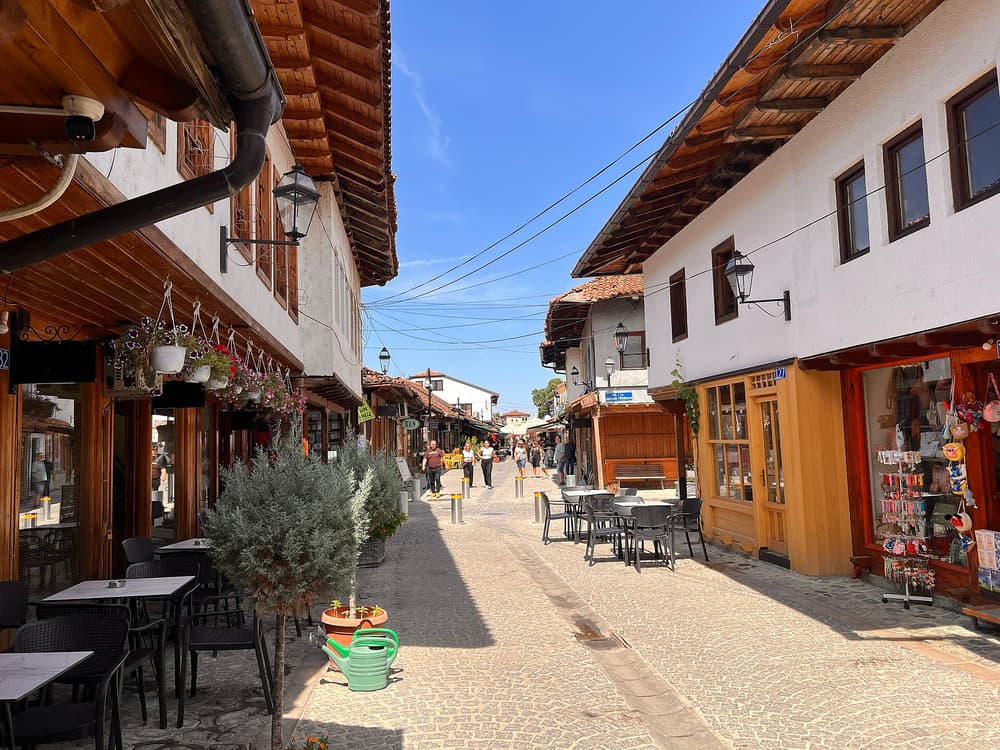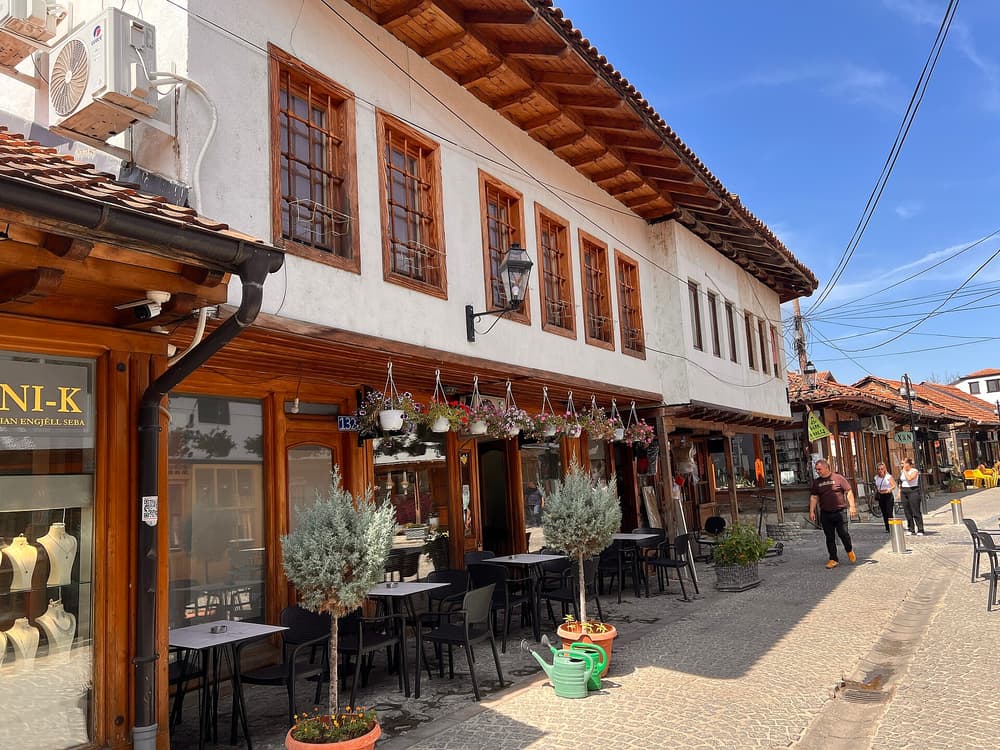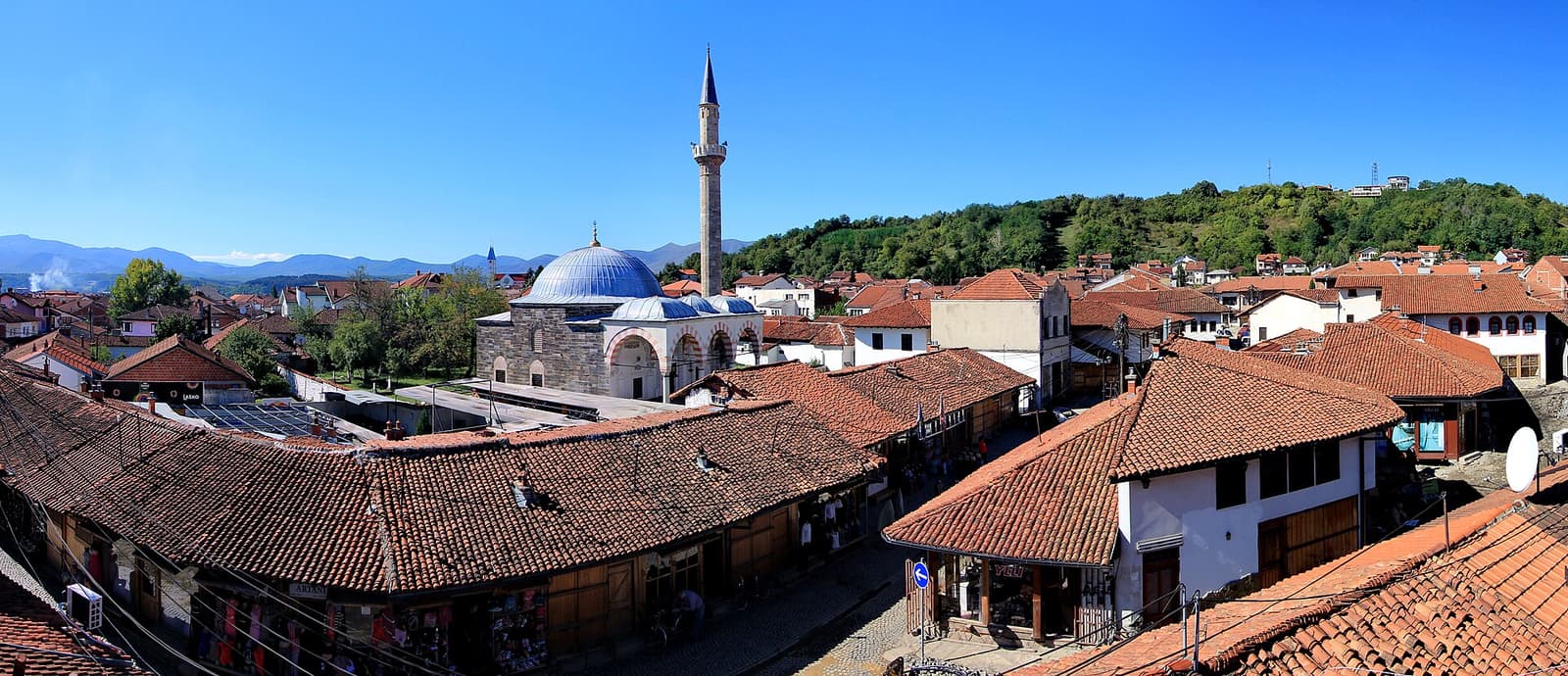
Gjakova (Gjakovë in Albanian, Đakovica in Serbian) is the town to choose if you want an authentic bazaar without the crowds. Its Grand Bazaar, the Çarshia e Madhe, was one of the largest in the region; much of it was burned in 1999, and the long rows of low wooden shops have since been rebuilt with care. Today they hold cafés, restaurants, tailors and craftsmen.
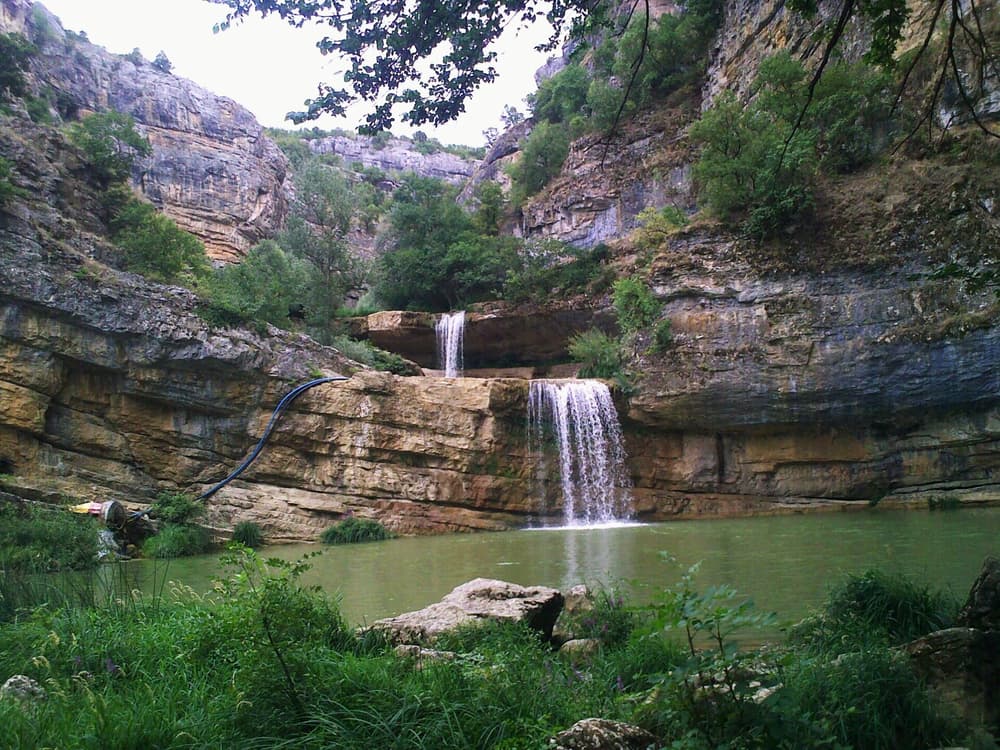
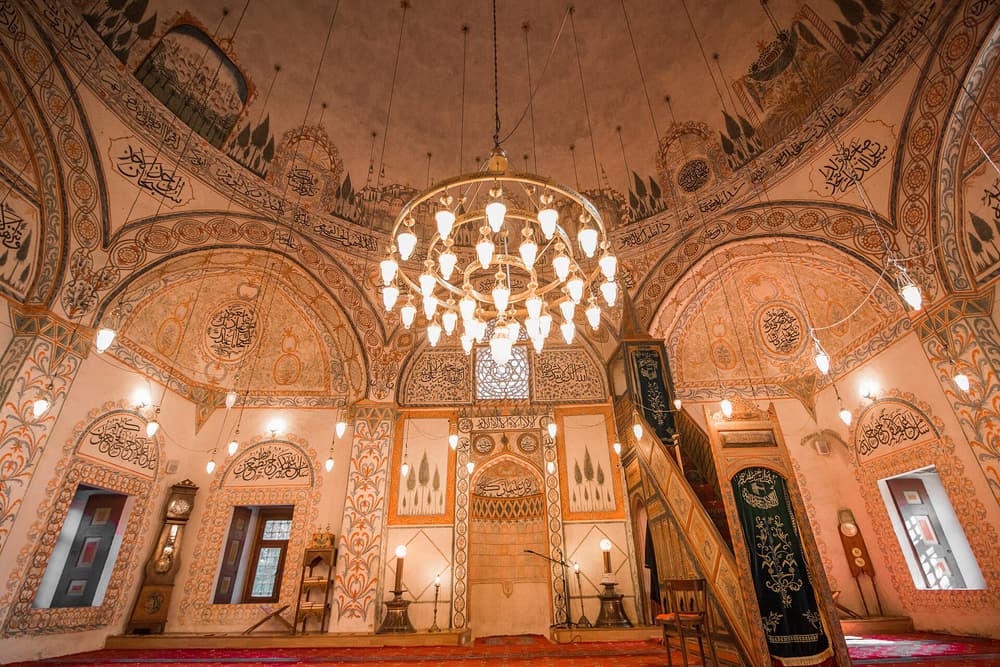
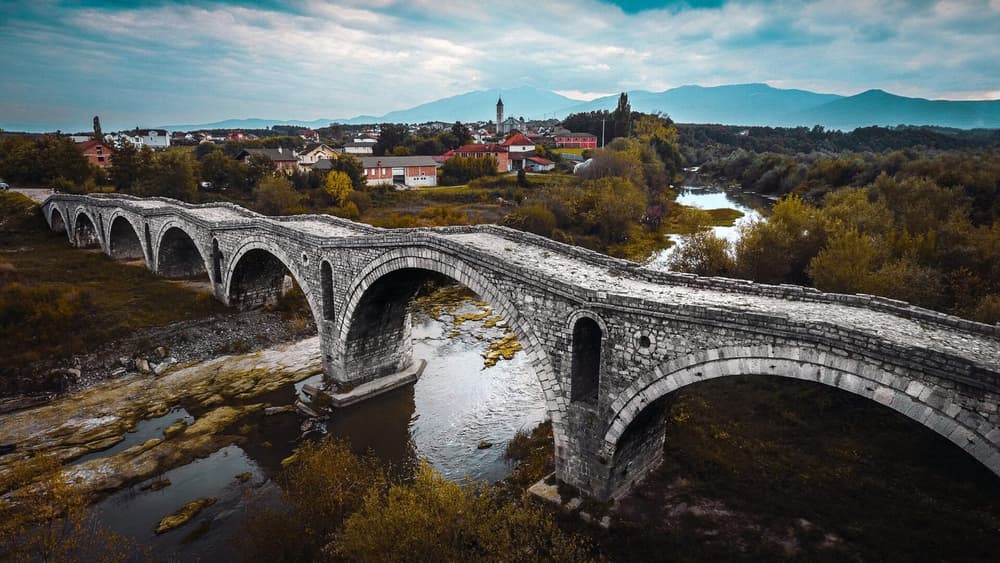
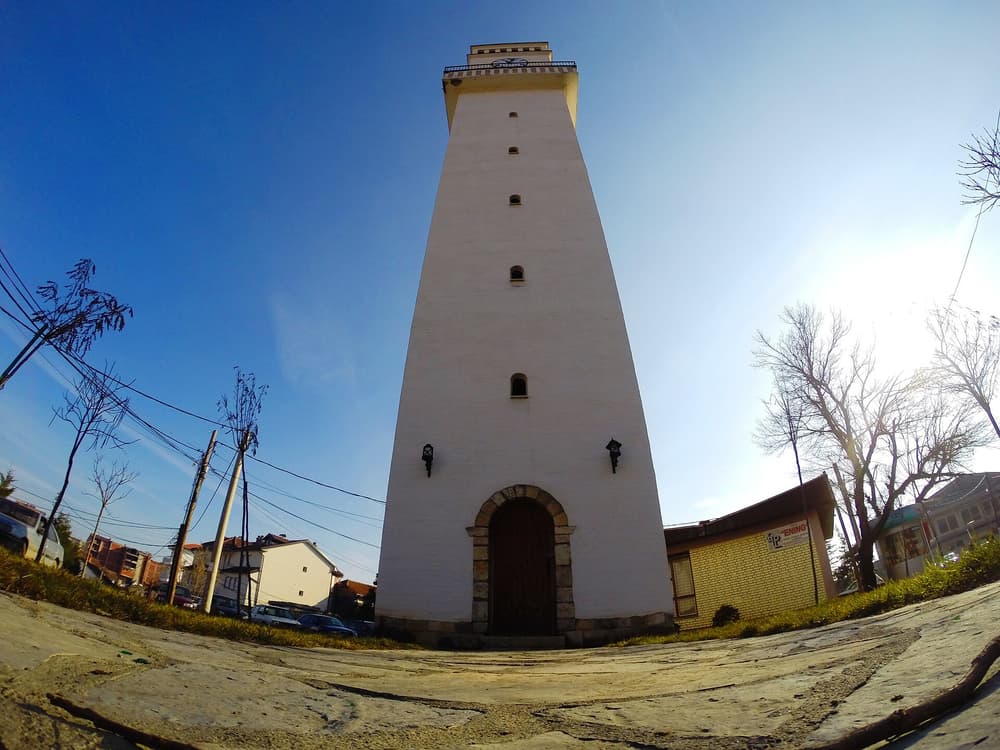
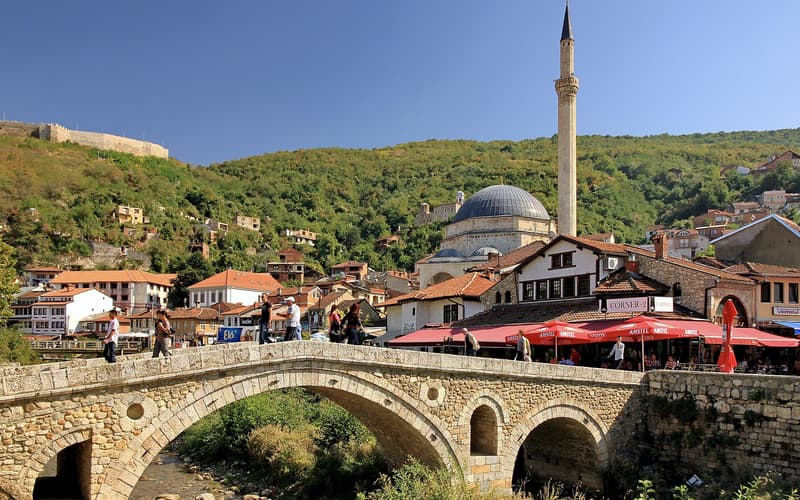
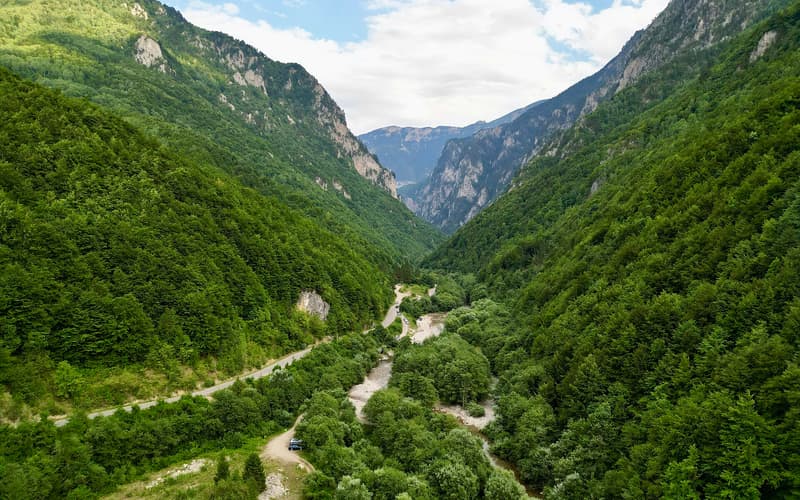
Beside the bazaar is the Hadum Mosque, with its painted interior, and the town also has an old stone clock tower and dervish lodges that recall a long Sufi tradition. Outside the centre are two fine Ottoman bridges, the Terzi and Tabak bridges. The Mirusha waterfalls, a chain of pools in a limestone gorge, are a short drive to the east.
Highlights
- Grand Bazaar — Çarshia e Madhe, rebuilt in traditional style with wooden shopfronts.
- Hadum Mosque — a sixteenth-century mosque with a richly painted interior.
- Clock tower — a tall stone landmark above the old town.
- Terzi Bridge — a long multi-arched Ottoman bridge outside town.
- Mirusha waterfalls — pools and falls in a limestone gorge, an easy day out.
- Tekkes — dervish lodges that show a less familiar side of Kosovo’s religious life.
Quick facts
| Where | South-western Kosovo, near the Albanian border |
|---|---|
| Names | Gjakovë (Albanian), Đakovica (Serbian) |
| Airport | Pristina (PRN), about 1 h 30 min by road |
| Ideal stay | 1–2 nights |
| Best for | Bazaar life, food, crafts, slow travel |
| Getting around | On foot in the bazaar; car or taxi to the bridges and waterfalls |
How long to stay & where to base yourself
A half day is enough for the bazaar and mosque, but one night gives you an evening in the old town, and two let you add Mirusha. Gjakova sits neatly between Peja and Prizren, so it makes a natural stop on a circular route.