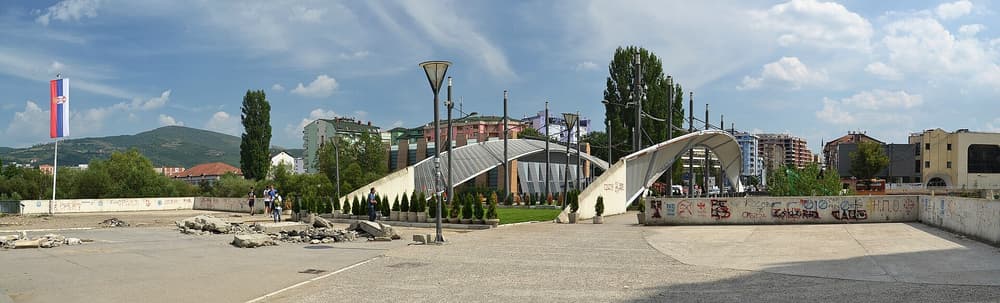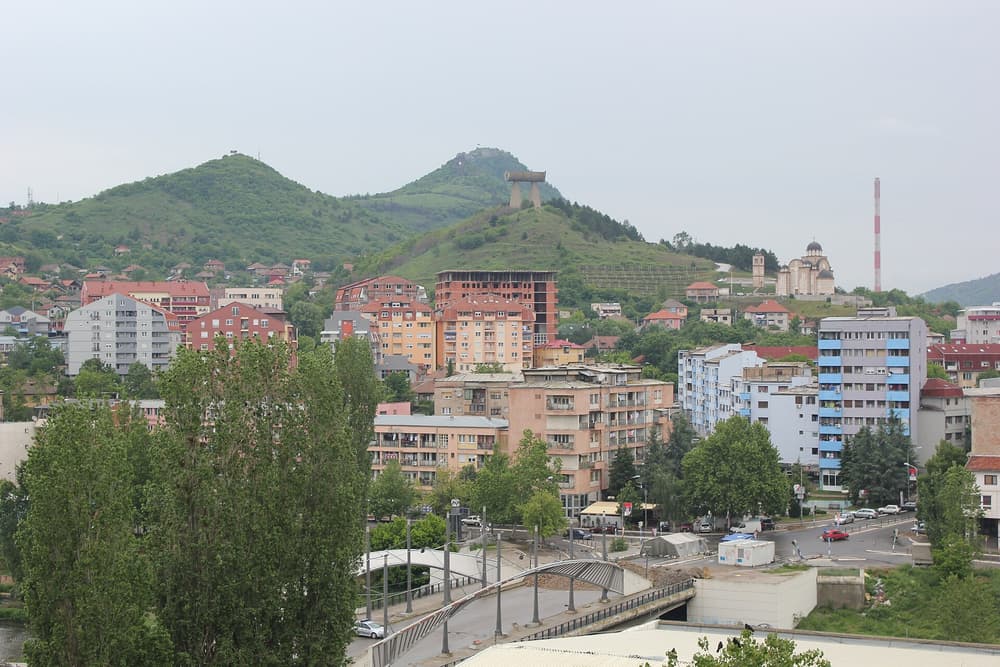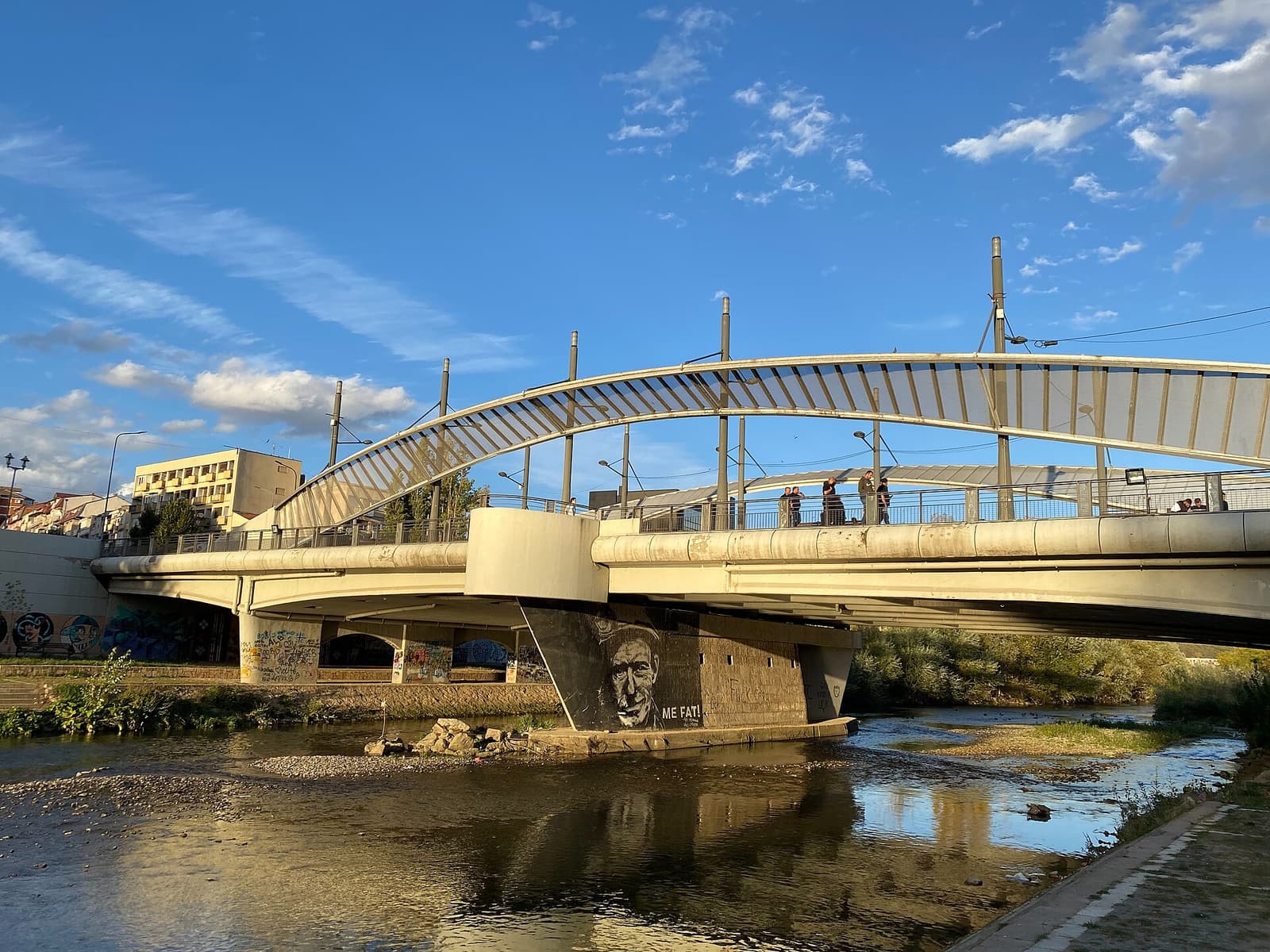
Mitrovica (Mitrovicë in Albanian, Kosovska Mitrovica in Serbian) is not a conventional tourist town, but it may be the most thought-provoking stop in Kosovo. The Ibar river runs through the middle of the city: the south is mostly Albanian and the north mostly Serb, and the bridge between them has long been a symbol of that division. In the Yugoslav era the city was the centre of the Trepça mining complex, whose story still shapes its identity.
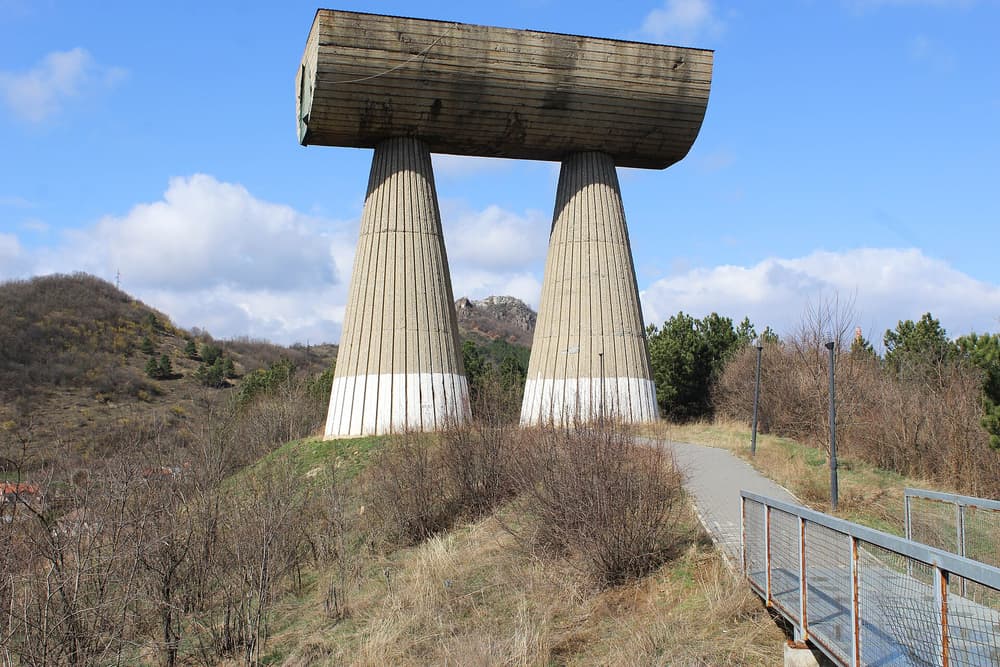
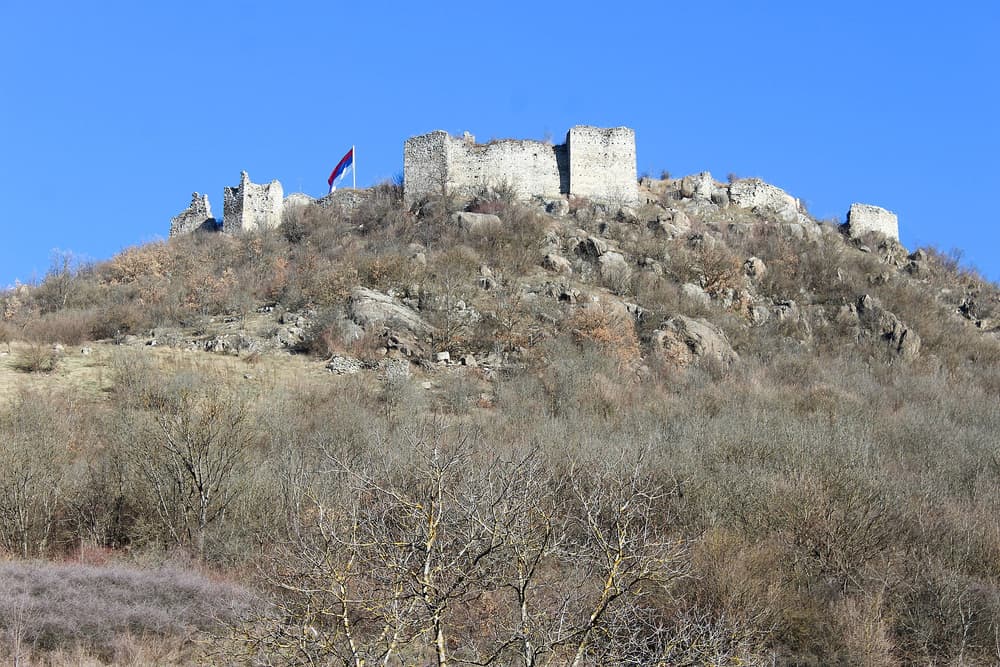
Visitors come for the history: the Monument to the Serbian and Albanian Partisans, a concrete and copper work by the architect Bogdan Bogdanović on the hill above the city; the crystal and mineral collection from the Trepça mines; and to the north, Zvečan fortress and Banjska Monastery. The situation here can change quickly. Check current advice before you travel, and consider going with a local guide.
Highlights
- The Ibar bridge — the best-known symbol of the divided city.
- Partisans monument — a landmark of Yugoslav-era memorial architecture.
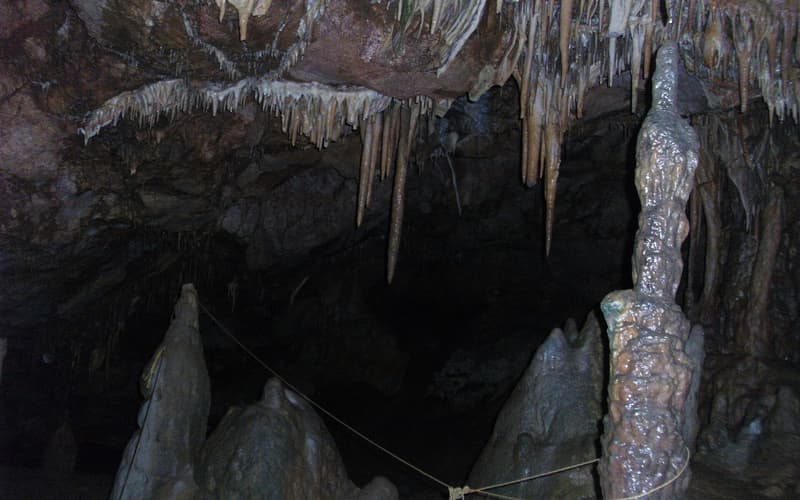
- Trepça crystals and minerals — specimens from one of Europe’s historic mining districts.
- Zvečan fortress — a medieval castle on a volcanic-looking hill.
- Banjska Monastery — a fourteenth-century foundation of King Milutin.
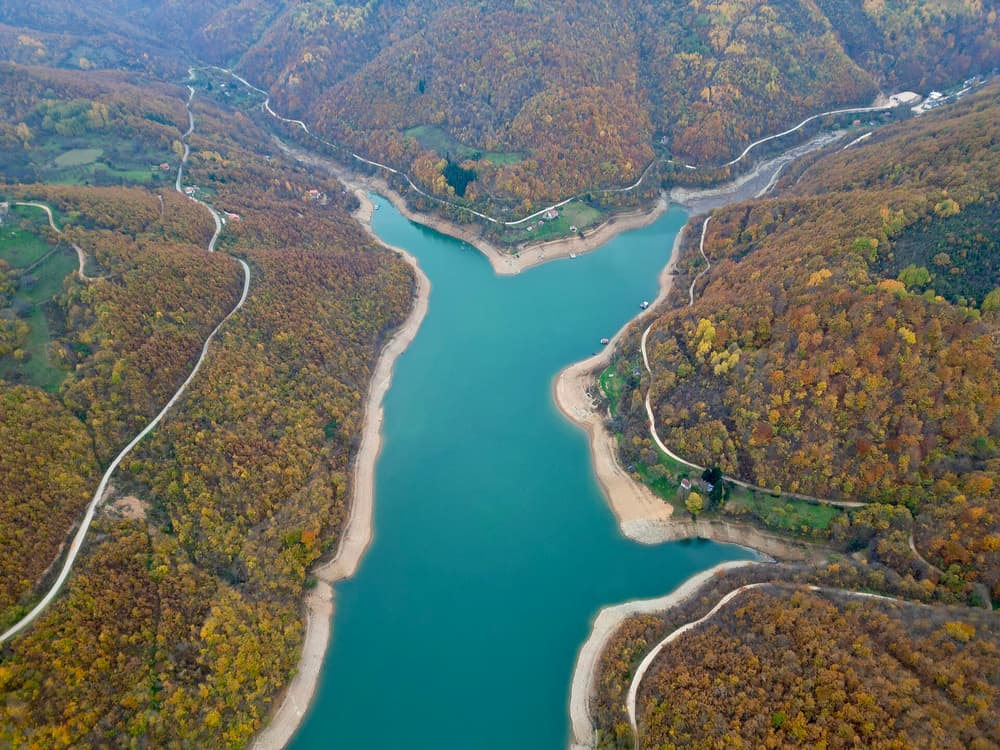
- Gazivoda (Ujman) Lake — a large reservoir in the hills to the north-west.
Quick facts
| Where | Northern Kosovo, on the Ibar river |
|---|---|
| Names | Mitrovicë (Albanian), Kosovska Mitrovica (Serbian) |
| Airport | Pristina (PRN), about 45 min by road |
| Ideal stay | A half day to 1 night |
| Best for | Recent history, industrial heritage, architecture |
| Currency | Euro; the Serbian dinar may still be seen in the north |
How long to stay & where to base yourself
Most people visit as a half-day trip from Pristina, about 45 minutes away, and a guide makes the visit much more meaningful. One night is enough if you also want to see the fortress and the lake. See Pristina for more choice of bases.